Stories of Giving
A rich history of giving
Generosity has helped shape Whakatū Nelson for generations. Explore the traditions, people and stories that continue to strengthen our communities.
Māori philosophy of giving
Exploring manaakitanga, koha, reciprocity and the collective responsibilities that sustain whānau, hapū and iwi.
Explore the story →
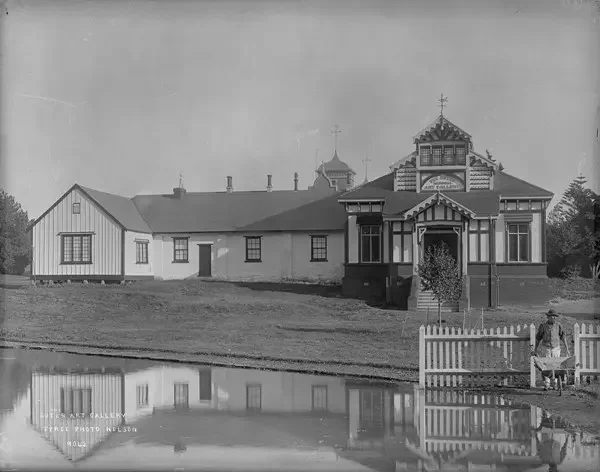
A History of Philanthropy in Nelson
The people, organisations and acts of generosity that have helped shape our region in the past.
Explore the story →
Giving in action - stories from our community
Meet the people and organisations making a difference across Whakatū Nelson today.
Chin Garden
“It all began with morning tea with colleagues in 2011. I opened the Nelson Mail and there was a photo of Miyazu Gardens cherry blossom. These trees are also well known in my home country Burma. I thought could we have a Chin garden for my ethnic community? I spoke to my colleagues and they connected me with Council staff, so that later our Chin group could speak to a public forum. I did an early drawing of all the elements we wanted in our garden and my Chin leaders added their ideas. Rhododendron (chokhleī) is our national flower and hornbill (yakok) our national bird. Aldo Miccio Mayor warmly affirmed our idea, reminding us it would need to be added to the long term plan. Since then I have held the vision and stayed in touch with both my community leaders and Council. I then met Bill Huppler our Community Partnerships Advisor & when? His guidance has been the key catalyst in this last phase. We presented again to Council and I still remember when he rang me to say: $40K had been approved for our plan. We were all so excited. Seven people arrived in 2003 from Burma, we now number over 800, most of us are Chin ethnicity. This garden will be a sanctuary for us to remind us of home and elements which echo our landscape. Also the public will enjoy our garden as a unique place. We celebrate 25 years of Burmese people arriving in New Zealand in 2028. Our garden will be flourishing by then.”
Sui Ting - Cross Cultural Worker for Red Cross Refugees
AI Sandbox
“AI should free people from tedious tasks, not replace them.” - Murray
“I’ve always been an enthusiast for AI,” says Murray. “I could see how it could help small agencies free their minds from tedious work - and make hard-won funding go further. I thought I’d retired, but when Richard Brudvik-Lindner started talking about this vision, I realised my lifetime in IT and our ability to deliver practical workshops could really make a difference. I had to say yes.”
While Richard may be the visionary - “the Pied Piper in this space” as Murray calls him, Sloane and Murray are focused on making it real for the community.
“We’ve supported over 500 people through the Rātā Foundation workshops alone,” says Sloane. “The most common feedback? ‘I wish I had known about this earlier’ or ‘You’ve just saved me a month’s work in ten minutes.’ That’s when you know it’s working.”
She points to a powerful example with the story of one agency uploading ten years of meeting minutes (with appropriate permissions and care around sensitive information) into an AI tool before a staff transition, enabling their successor to instantly retrieve years of institutional knowledge with a single prompt.
“When Richard approached me, I knew my science and tech background, along with my work in community organisations, could really help. The Nelson AI Sandbox’s mission to educate and support others felt like the right place to contribute and to keep learning about how fast AI is changing our world.” Now it’s about getting a much wider range of people involved, like schools to develop critical thinking about AI and practice, getting students ready before they leave, as well as charities, businesses, because everyone will be impacted.
At Nelson AI Sandbox, our philosophy is clear, she says: “always human in the loop, Human - AI - Human.”
“We drive it. We shape it. AI is a tool,” says Murray. “If we build capability here, we’re not just saving time, we’re strengthening the resilience and future-readiness of our whole region.”
Sloane and Murray LAST NAMES???
Nelson’s Women’s Centre
“It’s near the end of 1994 and I’m a community funding advisor for DIA. About four agencies around town including Women in Nelson (WIN - set up as an advocacy group) are being given notice of their premises leases expiring. Given their common interests of supporting women, temporarily they club together in a cottage in Paruparu Rd. We then hear of 44 Trafalgar St (NCC owned) house coming up for sale. We talk to Mayor Philip Woolaston. After the tender process fails, he is encouraging of talking with our group. We have only $160 in the Women in Nelson accounts. We suggested that could be a 10% deposit on the rent-to-buy proposal we made to Council. The house was in a shambles, we had loads of work to do. But WIN bought it, moved in mid 1995 and began fundraising in earnest. The other agencies came with us and they rented some of the rooms, with a unique contract from Social Welfare Dept (the only one in NZ) offering cervical screening. Other generous grants were made and then our most successful fundraiser was an art exhibition curated by Gurli Hansen. She had artist contacts all around the motu who gifted artworks for sale or commission. We made $35K out of that one fundraiser and remarkably the house was fully paid off by the end of 1996. It was about us all having a common interest - responding to the needs of women. We all worked together for a common good - women’s health and wellbeing. We worked with some of the most vulnerable then and still do. We often talked about ‘this place belongs to all women of Nelson’ - it still does.”
Penny Molnar - long time supporter and advocate of all things ‘women’ and all things ‘community’.